


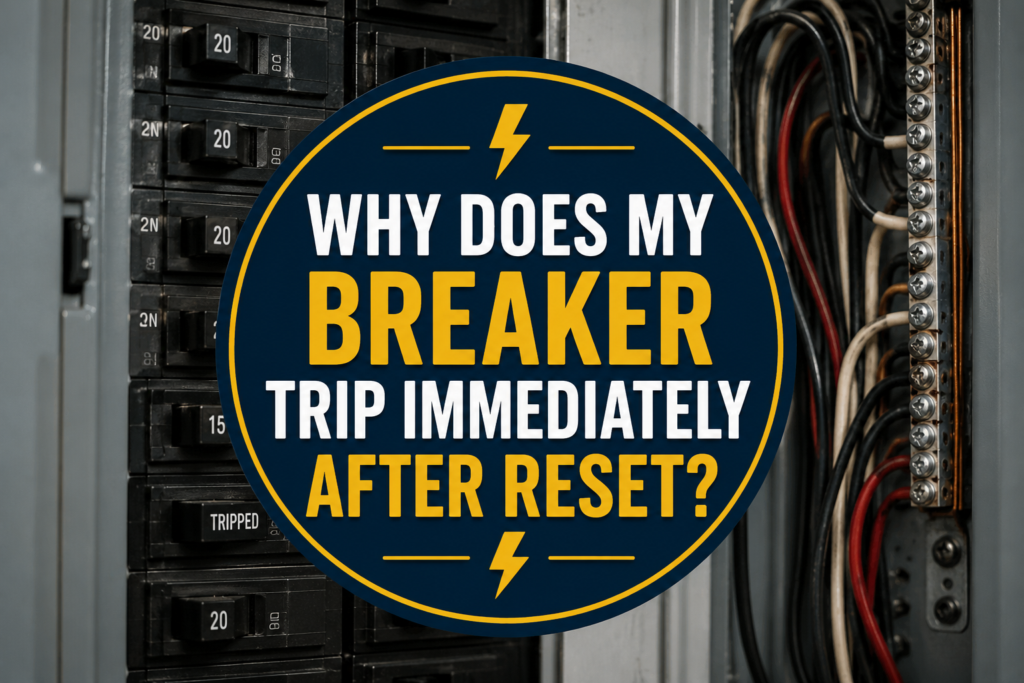
Why Does My Breaker Trip Immediately After Reset?
Causes, warning signs, repair costs & when to call an electrician in Seattle
In many Seattle-area homes, this problem can appear suddenly after plugging in a new appliance, during a storm, after a renovation, or simply as electrical components age over time. While the breaker may seem like the problem, it is often doing exactly what it was designed to do—shutting off power before wires overheat or electrical damage occurs.
In many Seattle-area homes, a buzzing breaker may be caused by a loose connection, an overloaded circuit, a failing breaker, or electrical arcing. Left unresolved, these issues can lead to damaged equipment, power outages, or even an increased risk of electrical fire.
Some causes are relatively simple to identify, while others require professional testing inside the electrical panel or circuit wiring. Continuing to reset a breaker that trips instantly can increase the risk of equipment damage, electrical arcing, or fire.
Below, we explain the most common reasons a breaker trips immediately after reset, the warning signs to watch for, typical repair costs, and when it's time to contact a licensed electrician.
Quick Answer
A breaker that trips immediately after reset is usually detecting a problem on the circuit and shutting off power for safety. Common causes include a short circuit, ground fault, damaged wiring, faulty breaker, or a defective appliance connected to the circuit. While the breaker itself may appear to be malfunctioning, it is often preventing overheating, electrical arcing, or fire. If a breaker will not stay on after being reset, avoid repeatedly forcing it on and have the circuit inspected to identify the underlying cause.
What Is a Circuit Breaker?
A circuit breaker is a safety device inside your electrical panel that automatically shuts off power when it detects a problem on a circuit. Its job is to protect your home's wiring from overheating, electrical faults, and potential fire hazards. When a breaker trips, it is responding to conditions that could damage electrical equipment or create an unsafe situation.
When a breaker trips immediately after being reset, it usually means the fault is still present. Unlike a temporary overload that may clear once devices are unplugged, an immediate trip often indicates a short circuit, ground fault, damaged wiring, or a defective electrical component somewhere on the circuit.
Think of a breaker as a safety switch that constantly monitors the flow of electricity. If it senses a dangerous condition, it disconnects power within fractions of a second. While a breaker that won't stay on can be frustrating, it is often preventing a much more serious electrical problem from developing.
What Causes a Breaker to Trip Immediately After Reset?
Here are the most common reasons we see in Seattle-area homes.
| Cause | What's Happening |
|---|---|
| Short Circuit | A hot wire is touching a neutral wire or another conductor, causing a sudden surge of current that trips the breaker instantly. |
| Ground Fault | Electricity is escaping its intended path and flowing to ground, creating an unsafe condition that causes the breaker to trip. |
| Faulty Appliance | A damaged appliance, tool, or device connected to the circuit may immediately trigger the breaker when power is restored. |
| Damaged Wiring | Worn insulation, pinched wires, rodent damage, or loose connections can create faults that prevent the breaker from staying on. |
| Defective Breaker | Although less common, breakers can fail internally and trip even when no major circuit problem exists. |
| Water Intrusion | Moisture inside outlets, junction boxes, outdoor equipment, or electrical panels can create short circuits and ground faults. |
| Overloaded Circuit | Too many devices drawing power at once may cause the breaker to trip repeatedly, especially when high-demand appliances are involved. |
What Causes a Breaker to Trip Immediately After Reset Most Often?
The most common causes of a breaker that trips immediately after reset are short circuits, ground faults, damaged wiring, and faulty appliances. In many cases, the breaker is doing exactly what it was designed to do—shutting off power before excessive current, overheating, or electrical arcing can damage your electrical system. While a defective breaker is possible, the underlying problem is more often found somewhere on the circuit itself, which is why repeated tripping should be investigated rather than ignored.
Can a Breaker Trip Immediately After Reset Because of One Appliance?
Yes. A faulty appliance can cause a breaker to trip immediately after being reset by creating a short circuit, ground fault, or excessive electrical load. Common culprits include space heaters, air conditioners, refrigerators, microwaves, sump pumps, and power tools. If the breaker stays on when all devices are unplugged but trips again after a specific appliance is connected, that appliance may be the source of the problem and should be inspected or replaced.
Warning Signs a Breaker That Trips Immediately After Reset May Be Dangerous
A breaker that trips immediately after reset doesn't always mean an emergency, but certain warning signs should never be ignored. Watch for the following:
- Breaker trips instantly every time you reset it
- Burning smells near the electrical panel, outlets, or switches
- Warm or hot breakers
- Buzzing, crackling, or sizzling sounds
- Flickering or dimming lights
- Visible scorch marks around outlets or the panel
- Sparks when plugging in appliances
Is a Breaker That Trips Immediately After Reset Dangerous?
Yes. A breaker that trips immediately after reset can indicate an active electrical fault that should not be ignored. While the breaker itself is performing a safety function, the underlying cause may involve a short circuit, ground fault, damaged wiring, moisture intrusion, or defective electrical equipment. These conditions can lead to overheating, electrical arcing, equipment damage, shock hazards, or even electrical fires if left unresolved.
| Situation | Risk Level |
|---|---|
| Breaker trips once after an overload and stays on after resetting | Low |
| Breaker trips repeatedly under normal use | Moderate |
| Breaker trips instantly every time it is reset | High |
| Burning smells, sparks, smoke, or visible damage are present | Very High |
Can a Breaker That Trips Immediately After Reset Be Harmless?
Sometimes. A breaker may trip due to a temporary overload or a faulty appliance that can be easily identified and corrected. However, if the breaker trips immediately every time it is reset, the cause is more likely to be a short circuit, ground fault, damaged wiring, or another electrical fault that should not be ignored. Persistent tripping is not considered normal and should be investigated to prevent potential equipment damage, shock hazards, or electrical fires.
Can It Be Repaired?
Yes. Most causes of a breaker that trips immediately after reset can be repaired by a licensed electrician once the underlying fault is identified.
Repairs may include:
- Repairing a short circuit
- Correcting a ground fault
- Replacing a faulty breaker
- Repairing damaged wiring
Typical Cost in Seattle
Costs vary depending on the type of electrical fault, accessibility of the wiring, and the amount of troubleshooting required to identify the cause of the tripping.
| Service | Typical Cost Range |
|---|---|
| Service call / diagnosis | $120 - $250 |
| Breaker replacement | $100 - $300 |
| Faulty outlet or switch repair | $150 - $500+ |
| Wiring repair | $250 - $900+ |
| Electrical panel replacement | $4,000 - $12,000+ |
When Should You Call an Electrician?
A breaker that trips immediately after reset is usually a sign of an underlying electrical fault rather than a normal operating condition. A licensed electrician can determine whether the issue is being caused by a short circuit, ground fault, damaged wiring, faulty breaker, moisture intrusion, or another problem before it creates a larger safety hazard.
Call a professional if:
- The breaker trips immediately every time you reset it
- The breaker is warm or hot to the touch
- You smell burning or see sparks
- Lights flicker or power cuts out unexpectedly
- Multiple outlets or devices lose power
- You are not sure what is causing the problem
- The affected circuit serves critical appliances or equipment
- The breaker continues tripping after unplugging all devices from the circuit
What We Commonly See in Seattle Homes
Seattle's older housing stock, damp climate, and aging electrical systems can contribute to breaker problems that cause immediate tripping after reset.
- Short circuits caused by damaged or deteriorated wiring
- Moisture intrusion in garages, basements, crawl spaces, and outdoor circuits
- Aging breakers that no longer operate reliably
- Ground faults in kitchens, bathrooms, exterior outlets, and other damp locations
Key Takeaway
A breaker that trips immediately after reset should never be ignored because it is usually responding to an active electrical fault rather than a temporary inconvenience. Short circuits, ground faults, damaged wiring, faulty appliances, moisture intrusion, and failing breakers are among the most common causes. While the breaker itself may seem to be the problem, it is often preventing overheating, electrical arcing, equipment damage, or even an electrical fire. Identifying and correcting the underlying cause is far safer than repeatedly attempting to reset the breaker. If the breaker will not stay on, a professional diagnosis can determine the source of the fault and restore the circuit safely.
The Bottom Line
A breaker that trips immediately after reset is usually a sign that the circuit is experiencing a fault that requires attention. While an occasional trip from a temporary overload may not indicate a serious problem, a breaker that will not stay on often points to a short circuit, ground fault, damaged wiring, faulty appliance, moisture intrusion, or a failing breaker. Repeatedly resetting the breaker without identifying the cause can increase the risk of equipment damage, electrical arcing, and safety hazards.
Protect Your Home
Electrical faults can create fire, shock, and equipment damage risks if left unresolved.
Find the Root Cause
Professional troubleshooting can identify exactly why the breaker is tripping and prevent unnecessary repairs.
Prevent Costly Repairs
Addressing electrical problems early can help avoid more extensive wiring damage and larger repair costs in the future.
Frequently Asked Questions
A breaker that trips immediately after reset is usually detecting an active electrical fault on the circuit. Common causes include short circuits, ground faults, damaged wiring, faulty appliances, moisture intrusion, or a defective breaker. The breaker is shutting off power to prevent overheating and potential safety hazards.
No. Repeatedly resetting a breaker without identifying the cause can be dangerous. If the breaker trips immediately or repeatedly, it may be responding to a serious electrical problem that could lead to equipment damage, electrical arcing, or fire.
Yes. A defective appliance can create a short circuit, ground fault, or excessive electrical load that causes the breaker to trip as soon as power is restored. Unplugging devices from the affected circuit can sometimes help identify whether an appliance is responsible.
A faulty breaker may trip unexpectedly, fail to reset properly, feel loose, show signs of overheating, or trip even after the circuit has been tested and no faults are found. However, wiring and circuit problems are much more common than breaker failure.
A short circuit occurs when electricity takes an unintended path between conductors, creating excessive current flow. A ground fault occurs when electricity escapes its intended path and flows to ground. Both conditions can cause a breaker to trip immediately and require prompt attention.
Yes. Unplugging all devices connected to the affected circuit is a good first troubleshooting step. If the breaker stays on afterward, a faulty appliance may be causing the problem. If the breaker still trips immediately, the issue is more likely within the wiring, outlets, switches, or electrical panel.
Yes. Moisture inside outlets, junction boxes, outdoor equipment, or electrical panels can create short circuits and ground faults that cause breakers to trip. Water-related electrical issues should be addressed as soon as possible to prevent further damage.
You should contact an electrician if the breaker trips immediately after reset, repeatedly trips without an obvious cause, feels hot, produces burning odors, shows signs of damage, or continues tripping after all appliances have been disconnected from the circuit.