


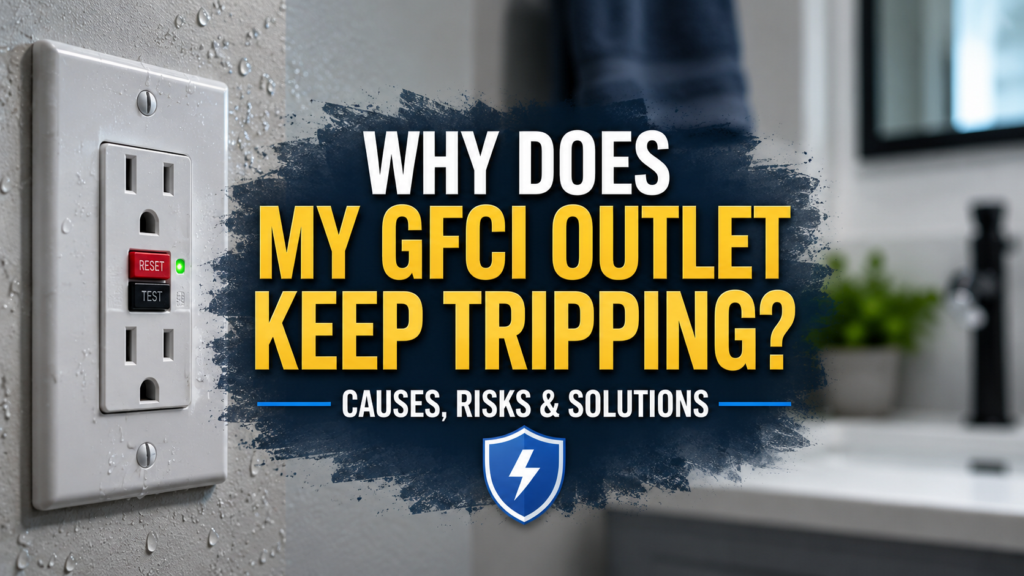
Why Does My GFCI Outlet Keep Tripping? Common Causes & Solutions
Causes, risks, costs & when to call an electrician in Seattle
A GFCI outlet is designed to protect you and your family from electrical shock. When it detects a ground fault or electrical imbalance, it quickly shuts off power to prevent potentially dangerous situations. While an occasional trip can be normal, a GFCI outlet that keeps tripping is often a sign that something needs attention.
Below, we break down the most common reasons GFCI outlets trip repeatedly, what warning signs homeowners should watch for, simple troubleshooting steps you can try, and when it's time to contact a licensed electrician for a professional inspection.
Quick Answer
GFCI outlets trip when they detect a ground fault, moisture, damaged wiring, a faulty appliance, or another electrical problem that could create a shock hazard. While an occasional trip is normal, repeated tripping usually indicates an issue that should be identified and corrected.
What Is a GFCI Outlet?
A GFCI (Ground Fault Circuit Interrupter) outlet is a safety device designed to protect people from electric shock. It continuously monitors the flow of electricity and quickly shuts off power if it detects a ground fault or electrical imbalance.
Think of it as a safety guard for your electrical system. When it senses a potentially dangerous condition, it cuts power before someone can be injured or equipment can be damaged.
What Causes a GFCI Outlet to Keep Tripping?
Here are the most common reasons homeowners experience repeated GFCI trips.
| Cause | What's Happening |
|---|---|
| Moisture or Water Exposure | Water inside the outlet box or connected devices can trigger the GFCI. |
| Faulty Appliance | A damaged appliance may leak electricity and cause the GFCI to trip. |
| Ground Fault | Electricity is flowing outside its intended path, creating a potential shock hazard. |
| Damaged Wiring | Worn, loose, or damaged wiring can cause the outlet to trip repeatedly. |
| Overloaded Circuit | Too many devices on the same circuit can contribute to nuisance trips. |
| Failing GFCI Outlet | Older GFCI outlets can wear out and begin tripping even when no fault exists. |
| Outdoor Conditions | Rain, humidity, insects, or debris can affect outdoor GFCI outlets and receptacles. |
What Causes a GFCI Outlet to Keep Tripping?
The most common causes of repeated GFCI trips are moisture, faulty appliances, ground faults, damaged wiring, overloaded circuits, and aging GFCI outlets. Although GFCI outlets are designed to trip for safety, frequent trips often signal an underlying electrical problem that requires attention.
Can a breaker trip because of one appliance?
Yes. A malfunctioning appliance can draw excessive current and repeatedly trip a breaker, even when the circuit is not overloaded.
Signs of a Problem
Your breaker won't always trip for no reason. Look for these warning signs:
- Breaker trips repeatedly
- Buzzing or humming sounds
- Burning smells near the panel
- Warm or hot breaker surface
- Flickering or dimming lights
- Scorch marks on outlets or switches
Is It Dangerous?
Sometimes. A GFCI outlet is designed to trip when it detects a potentially dangerous electrical condition. While an occasional trip may simply indicate that the outlet is doing its job, repeated trips can point to moisture intrusion, damaged wiring, faulty appliances, or a ground fault that should be investigated.
| Situation | Risk Level |
|---|---|
| GFCI trips once after using a hair dryer, pressure washer, or other appliance | Low |
| GFCI trips occasionally during wet or humid conditions | Moderate |
| GFCI trips repeatedly with nothing plugged in | High |
| Outlet won't reset, sparks, smells burnt, or shows visible damage | Very High |
Can a GFCI outlet trip because of one appliance?
Yes. A faulty appliance can leak electricity to ground and cause a GFCI outlet to trip repeatedly, even when the outlet and circuit are otherwise functioning normally.
Can It Be Repaired?
Yes. Most GFCI outlet problems can be repaired once the underlying cause is identified.
Repairs may include:
- Removing moisture or water intrusion
- Replacing a faulty appliance
- Repairing or replacing damaged wiring
- Replacing a worn-out GFCI outlet
Typical Cost in Seattle
Costs vary depending on the cause of the problem, accessibility, and whether repairs are needed beyond the outlet itself.
| Service | Typical Cost Range |
|---|---|
| Service call / diagnosis | $120 - $250 |
| GFCI outlet replacement | $190 - $350 |
| Outlet or wiring repair | $250 - $900+ |
| Circuit troubleshooting | $380 - $800 |
| Moisture or outdoor outlet repairs | $250 - $900+ |
When Should You Call an Electrician?
A GFCI outlet that trips occasionally may simply be responding to a temporary electrical fault. However, repeated trips often indicate a problem that should be investigated. A licensed electrician can determine whether the issue is caused by moisture, faulty wiring, a defective appliance, or a failing GFCI outlet before it becomes a larger safety concern.
Call a professional if:
- The GFCI outlet trips repeatedly
- The outlet won't reset
- You smell burning or see signs of damage
- The outlet feels warm to the touch
- The GFCI trips with nothing plugged in
- You're unsure what's causing the problem
What We Commonly See in Seattle Homes
Seattle's wet climate and abundance of older homes can contribute to GFCI outlet problems, especially in areas where moisture is present.
- Moisture intrusion in bathrooms, kitchens, and outdoor outlets
- Aging GFCI outlets that no longer pass self-tests reliably
- Ground faults caused by damaged appliances or extension cords
- Water exposure in exterior receptacles, garages, crawl spaces, and basements
Key Takeaway
A GFCI outlet is designed to protect you from electric shock by shutting off power when it detects a ground fault or electrical imbalance. While occasional trips can occur during normal operation, repeated tripping often indicates an underlying problem that should not be ignored.
Moisture, faulty appliances, damaged wiring, and aging GFCI outlets are among the most common causes. Because GFCI outlets are safety devices, frequent trips usually mean they are detecting a condition that could present a shock hazard.
Finding and correcting the root cause is safer than repeatedly pressing the reset button. If the outlet continues to trip, won't reset, or shows signs of damage, a professional inspection is recommended.
The Bottom Line
A GFCI outlet that keeps tripping is usually a sign that it's doing its job and detecting a potential problem. While some causes are simple, such as a faulty appliance or temporary moisture exposure, others may involve damaged wiring or a failing outlet. Identifying the cause early can help prevent safety hazards and avoid more costly repairs later.
Protect Your Home
GFCI outlets help prevent electric shock in areas where water and electricity may come into contact.
Find the Root Cause
A proper diagnosis can determine whether the issue is the outlet, an appliance, moisture, or wiring.
Prevent Costly Repairs
Addressing the cause of repeated trips helps improve safety and reliability.
Frequently Asked Questions
Not always, but it should not be ignored. Repeated GFCI trips can indicate moisture, faulty wiring, a damaged appliance, or another electrical issue that may create a shock hazard.
A GFCI outlet that trips with nothing connected may be detecting moisture, damaged wiring, or an internal fault within the outlet itself. Professional troubleshooting may be needed to identify the cause.
Yes. A faulty appliance can leak electricity to ground, causing the GFCI outlet to shut off power as a safety precaution.
Bathrooms are exposed to moisture and humidity, which are common causes of GFCI trips. Hair dryers, curling irons, and other appliances can also contribute to ground faults.
Outdoor GFCI outlets are frequently exposed to rain, irrigation systems, humidity, insects, and debris. Any of these conditions can cause the outlet to trip repeatedly.
You can reset a GFCI outlet after a trip, but repeatedly resetting it without finding the cause is not recommended. Frequent trips usually indicate an underlying issue that should be corrected.
Most GFCI outlets last about 10 to 15 years under normal conditions. Older units may become less reliable and can begin tripping unnecessarily or fail to reset.
A GFCI outlet should be replaced if it won't reset, fails its built-in test function, shows signs of damage, or continues tripping after other causes have been ruled out.