
Quick Answer
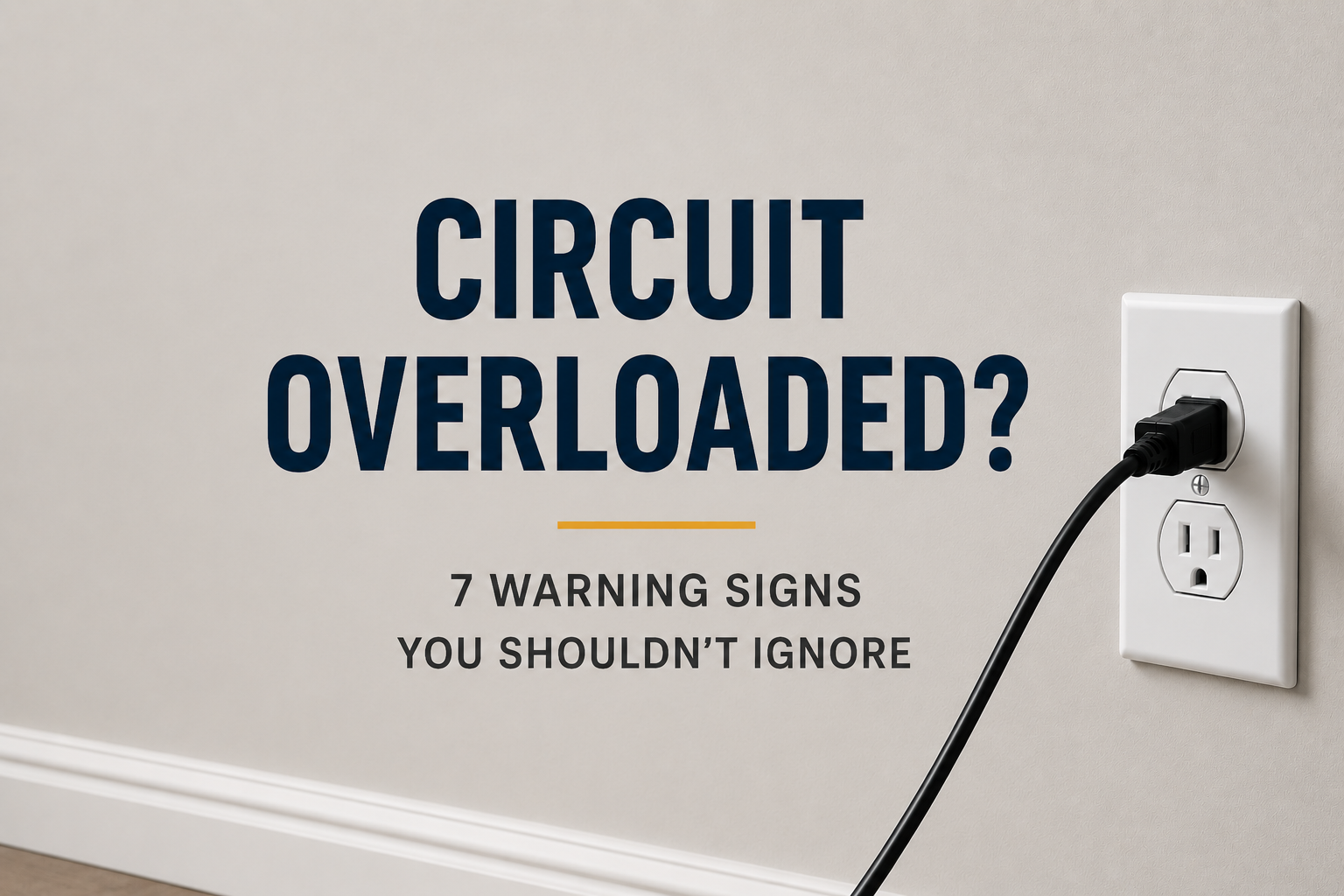
An overloaded circuit occurs when more electricity is being drawn from a circuit than it was designed to handle. Common warning signs include breakers that trip repeatedly, lights that dim when appliances start, buzzing outlets, warm wall plates, and power loss in part of the home.
In many cases, an overloaded circuit is caused by modern electrical demands exceeding the capacity of an older electrical system. While a single overload may not cause immediate damage, repeated overloads can overheat wiring, damage devices, and increase the risk of electrical fires.
If your breaker keeps tripping, avoid repeatedly resetting it. The breaker is designed to protect your home's wiring from excessive current and should be inspected if the problem continues.
What Is an Overloaded Circuit?
An electrical circuit is designed to carry a specific amount of current safely. When too many devices, appliances, or electrical loads operate on the same circuit, the demand can exceed the circuit's capacity.
- Circuit Capacity
- The maximum amount of electrical current a circuit can safely deliver.
- Electrical Load
- The amount of electricity being used by connected devices.
- Overload
- A condition where demand exceeds the circuit's safe operating limit.
Circuit breakers are designed to trip during overload conditions. This protects the wiring hidden behind walls from overheating.
According to the Consumer Product Safety Commission, overloaded circuits are one of the most common causes of residential electrical hazards.
Recent Posts
- Why Is My GFCI Outlet Not Working? 7 Common Causes & Quick Fixes
- How to Tell If an Electrical Circuit Is Overloaded
- Outlet Stopped Working but the Breaker Isn’t Tripped? 7 Common Causes
- Why Is My Ceiling Light Flickering? Common Causes & Warning Signs
- Why Do My Lights Dim When the AC Turns On? (And Is It Dangerous?)
OVERLOADED CIRCUIT? DON’T IGNORE THE WARNING SIGNS.
Frequent breaker trips, flickering lights, warm outlets, and power loss may indicate an overloaded electrical circuit.
Our licensed electricians can identify the cause and recommend the safest repair or upgrade for your home's electrical system.
Schedule an Electrical Inspection7 Signs Your Electrical Circuit Is Overloaded
- Breakers trip repeatedly.
- Lights dim when large appliances start.
- Outlets feel warm or hot.
- Buzzing sounds come from outlets or panels.
- Burning smells appear near electrical devices.
- Power is lost in one room or section of the home.
- Extension cords and power strips are used constantly.
Many homeowners experience several of these symptoms simultaneously. For example, a circuit may trip while lights flicker and outlets become warm during heavy appliance use.
Related troubleshooting guides:
Common Causes of Circuit Overloads
| Cause | How It Creates an Overload |
|---|---|
| Space Heaters | Can draw 1,500 watts or more continuously. |
| Portable Air Conditioners | Create sustained high electrical demand. |
| Kitchen Appliances | Microwaves, air fryers, and coffee makers often share circuits. |
| EV Charging | May exceed the available capacity of older circuits. |
| Home Additions | New loads added without electrical upgrades. |
Many homes built decades ago were never designed for electric vehicle chargers, multiple computers, large televisions, battery backups, or modern kitchen equipment.
If your home's electrical demands have increased significantly, a panel upgrade or dedicated circuit installation may be necessary.
Can an Overloaded Circuit Be Dangerous?
Yes. While occasional breaker trips are usually not emergencies, repeated overload conditions should never be ignored.
- Excess heat can damage insulation around wiring.
- Electrical connections may loosen over time.
- Outlets and switches can deteriorate.
- Arcing conditions may develop.
- Fire risk increases significantly.
Contact a qualified electrician immediately if you notice:
- Burning odors
- Discolored outlets
- Scorch marks
- Buzzing breakers
- Warm electrical panels
Related reading:

Need Help With an Overloaded Circuit?
Frequent breaker trips, dimming lights, or warm outlets may indicate an overloaded circuit. Our licensed electricians can identify the cause and recommend the safest solution.
Serving Seattle, Bellevue, Issaquah, and surrounding areas.
Request service online, call, or text for fast assistance.
Need an Electrician in the Seattle Area?
If you’re in Bellevue, Renton, Kent, Sammamish, Issaquah, or nearby, our licensed electricians can help with repairs, upgrades, and installations.
Explore our services and areas below or call for fast, local service.
Need an Electrician? We Can Help.
From small repairs to full system upgrades, our licensed electricians are ready to help. Fast response. Quality work. Guaranteed.
Available 7 Days a Week
Services We Offer
Professional electrical services for your home or business.
Electrical Repairs
Troubleshooting, repairs, and safety inspections.
Panel Upgrades
Upgrade your panel for more power and safety.
EV Charger Installation
Fast, safe installation for all major EV brands.
Dedicated Circuits
Add power for appliances, EVs, hot tubs, and more.
Lighting Installation
Indoor, outdoor, recessed, accent and more.
Areas We Serve
Proudly serving the Eastside and South King County.
Licensed. Insured. Local.
We're a local team you can count on for safe, code-compliant work.
Proudly Serving the Greater Seattle Area
Whether you're in a quiet cul-de-sac in Sammamish or a busy neighborhood in Tacoma, Surge Electrical delivers expert, licensed service you can count on. We cover a wide service area to bring fast response times, transparent pricing, and trustworthy workmanship to homes and businesses across the region.
- Seattle, WA
- West Seattle, WA
- Bellevue, WA
- Redmond, WA
- Kirkland, WA
- Issaquah, WA
- Sammamish, WA
- Renton, WA
- Newcastle, WA
- Mercer Island, WA
- Maple Valley, WA
- Kent, WA
- Covington, WA
- North Bend, WA
- SeaTac WA
- Tukwila, WA
- White Center, WA
Additional Service Areas
- Algona, WA
- Auburn, WA
- Ballard, WA
- Ballinger, WA
- Beacon Hill, WA
- Belltown, WA
- Boradview, WA
- Bothell, WA
- Browns Point, WA
- Burien, WA
- Capitol Hill, WA
- Carnation, WA
- Clyde Hill, WA
- Cottage Lake, WA
- Dash Point, WA
- Delridge, WA
- Des Moines, WA
- Duval, WA
- East Renton Highlands, WA
- Eastgate, WA
- Fairwood, WA
- Federal Way, WA
- Forest Villa, WA
- Fremont, WA
- George Town, WA
- Green Lake, WA
- Greenwood, WA
- Haller Lake, WA
- Inglewood, WA
- Juanita, WA
- Klahanie, WA
- Lake City, WA
- Lake Forest Park, WA
- Leschi, WA
- Madison Park, WA
- Madison Valley, WA
- Madrona, WA
- Magnolia, WA
- Maple Leaf, WA
- Medina, WA
- Moorlands, WA
- Muckleshoot, WA
- North City, WA
- Northgate, WA
- Pacific, WA
- Phinney Ridge, WA
- Pine Lake, WA
- Queen Anne, WA
- Rainier Valley, WA
- Redmond Ridge East, WA
- Ridgecrest, WA
- Richmond Beach, WA
- Shoreline, WA
- Snoqualmie, WA
- Trilogy, WA
- Trossachs, WA
- Univercity District, WA
- Union Hill-Novelty Hill, WA
- Washington Park, WA
- Woodinville, WA
Frequently Asked Questions
When a circuit becomes overloaded, it attempts to draw more electrical current than it was designed to handle. This can cause breakers to trip, lights to dim, outlets to become warm, and wiring to overheat. The breaker is designed to shut off power before the wiring reaches dangerous temperatures.
Common signs include frequently tripped breakers, flickering or dimming lights, buzzing outlets, warm wall plates, burning odors, and appliances losing power when other devices are used on the same circuit.
Yes. Repeated overload conditions can generate excessive heat inside walls, outlets, switches, and electrical panels. Over time, this heat can damage insulation and increase the risk of electrical arcing and fire.
A breaker may trip repeatedly because the circuit is overloaded, an appliance is drawing excessive current, a short circuit exists, or there is a wiring problem somewhere on the circuit. A breaker that trips often should not be ignored.
The answer depends on the circuit size and the power requirements of the connected devices. High-demand appliances such as space heaters, microwaves, portable air conditioners, and EV chargers can quickly consume most of a circuit's available capacity.
Yes. Many portable space heaters draw up to 1,500 watts, which can place a significant load on a circuit. Running additional devices on the same circuit may cause the breaker to trip.
It can, particularly in older homes with limited electrical capacity. Many EV chargers require dedicated circuits and may require a panel upgrade if the existing electrical service cannot safely support the additional load.
An overloaded circuit occurs when too many devices draw power from the same circuit. A short circuit occurs when electricity follows an unintended path, often causing the breaker to trip instantly. Both conditions require attention but have different causes.
Repeated overloads can create voltage fluctuations and excessive heat that may shorten the lifespan of connected devices and appliances. Sensitive electronics are particularly vulnerable to unstable electrical conditions.
You should contact an electrician if breakers trip repeatedly, outlets become warm, lights dim frequently, burning odors are present, or your home struggles to support modern electrical loads. A professional can identify the cause and recommend appropriate repairs or upgrades.
